Thermal Energy Storage Tanks
CUSTOM THERMAL ENERGY STORAGE TANKS FOR MISSION-CRITICAL COOLING
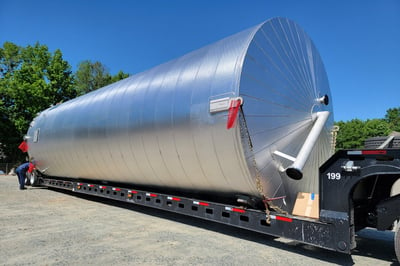
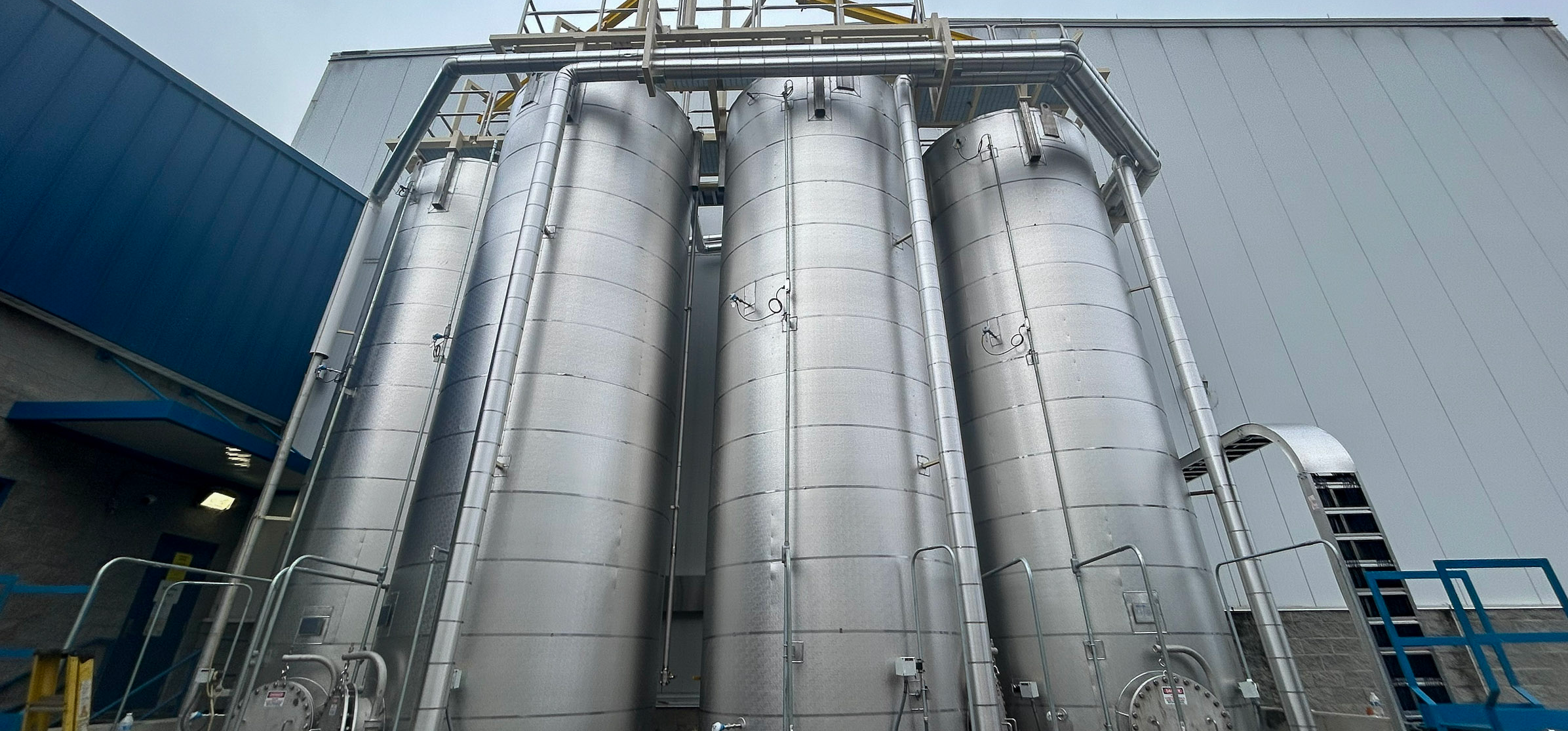
Reliable cooling capacity when every second matters. Bendel designs and fabricates custom TES tanks that hold a reserve of chilled water — maintaining cooling through power transitions, generator transfers, equipment outages, and peak demand. Every tank is built to applicable ASME and API standards.

WHAT IS A THERMAL ENERGY STORAGE TANK?
A thermal energy storage (TES) tank stores chilled water that a facility can use the moment it's needed — bridging the gap between a power interruption and full generator load, shifting cooling production to off-peak hours, and adding redundancy when demand peaks.
Bendel custom-designs and fabricates TES tanks to applicable ASME and API standards for data centers, mission-critical facilities, and industrial cooling systems. Properly engineered thermal storage improves operational resilience, reduces utility demand charges, and strengthens overall cooling system performance.
Because no two cooling plants are alike, every Bendel TES tank is engineered to project-specific requirements — from diffuser geometry and stratification targets to materials, capacity, and insulation.
At a Glance
• Bridges generator startup & transfer windows
• Shifts chiller load to lower-cost off-peak hours
• Adds cooling redundancy for peak loads
• Built & tested to ASME Section VIII / API 650 & 620
• Carbon or stainless · vertical or horizontal · any capacity
Headline
Add your content here.
KEEP CRITICAL COOLING SYSTEMS ONLINE
Stored cooling capacity does three jobs at once - protecting uptime, lowering operating cost, and strengthening resilience.
Maintain cooling during power transitions
TES tanks provide a critical reserve of chilled water during utility disruptions and generator startup sequences — ensuring uninterrupted cooling when infrastructure is most vulnerable.
• Bridges generator startup & transfer windows
• Maintain cooling during power interruptions
• Protect high-density server environments
• Support uptime and SLA requirements
• Reduce the risk of thermal excursions
Headline
Add your content here.
Reduce energy & demand costs
TES systems let operators shift cooling production to off-peak periods when electricity costs are lower — improving overall system efficiency and economics.
• Shift chiller operations to off-peak hours
• Lower utility demand charges
• Improve chiller operating efficiency
• Reduce peak electrical loads
• Support long-term energy management initiatives
Headline
Add your content here.
Strengthen system resilience
By adding stored cooling capacity, TES tanks improve system stability and provide an additional layer of protection during periods of elevated demand.
• Add cooling redundancy
• Stabilize thermal performance during peak loads
• Improve operational flexibility
• Support future facility expansion
• Enhance long-term infrastructure reliability
Headline
Add your content here.
SUPPORTING RELIABLE COOLING ACROSS CRITICAL OPERATIONS
Healthcare
ENGINEERED TO YOUR PROJECT REQUIREMENTS
Every TES tank is designed and fabricated to meet the unique performance requirements of your cooling system and facility infrastructure.
01/ STANDARDS
Performance Enginee
• ASME Section VIII fabrication
• API 650 and API 620 tank fabrication
• Custom-engineered TES configurations
• Full-code compliant fabrication & testing
Headline
Add your content here.
02/ CONFIGURATIONS
Configuration Options
• Vertical TES tank design
• Horizontal TES tank design
• Shop-fabricated & field-erected
• Carbon steel construction
• Stainless steel construction
• Custom capacities & dimensions
Headline
Add your content here.
03/ PERFORMANCE
Performance Engineering
• Application-specific diffuser design
• Optimized thermal stratification
• Custom nozzle placement
• MEP coordination
• Climate-specific insulation systems
• Platforms, ladders & appurtenances
Headline
Add your content here.
04/ DOCUMENTATION
Quality Assurance
• Hydrostatic Testing
• Comprehensive QC inspections
• Full ASME/API documentation
• Material traceability
• Third-party inspection support
• Commissioning support documentation
Headline
Add your content here.
CHARGE OFF-PEAK. STORE IT COLD. DISCHARGE ON DEMAND
.png?width=50&height=50&name=Charge%20(2).png)
Run Chillers Off-Peak
.png?width=50&height=50&name=Store%20(2).png)
.png?width=50&height=50&name=Discharge%20(2).png)
STEP 03 - DISCHARGE
THERMAL ENERGY STORAGE TANK FAQ
-
How does a TES tank keep cooling during a power outage?
When utility power drops, cooling has to continue through the seconds it takes generators to start and transfer load. A TES tank holds pre-chilled water in reserve and discharges it on demand, maintaining cooling to high-density server environments and protecting against thermal excursions until full mechanical cooling is restored.
-
How do TES tanks reduce energy and demand costs?
TES tanks let operators run chillers during off-peak hours when electricity is cheaper, storing that cooling for use during the day. This load-shifting lowers utility demand charges, reduces peak electrical loads, and can improve overall chiller operating efficiency.
-
What standards are Bendel TES tanks built to?
Bendel fabricates TES tanks to ASME Section VIII and to API 650 and API 620 for larger atmospheric and low-pressure storage. Every tank is built and tested to applicable code, with hydrostatic testing, full ASME/API documentation packages, and material traceability.
-
What sizes and configurations of TES tank does Bendel offer?
Bendel builds vertical and horizontal TES tanks in carbon steel or stainless steel, as shop-fabricated or field-erected units, in custom capacities and dimensions. Each design includes application-specific diffusers, optimized stratification, custom nozzle placement, and climate-appropriate insulation.
-
What is thermal stratification, and why does it matter for TES performance?
Thermal stratification keeps cold supply water and warmer return water separated in distinct layers inside the tank, with a thin transition zone called the thermocline between them. Well-engineered diffusers preserve that separation so the tank delivers its full rated cold capacity. Stratification performance (not tank volume alone) determines how much usable cooling a TES system provides.
-
What facilities use thermal energy storage tanks?
TES tanks serve data centers, colocation and hyperscale facilities, AI and high-density computing environments, central utility plants, district cooling systems, healthcare facilities, university and campus energy systems, manufacturing operations, and government and defense facilities.
-
Where does Bendel manufacture TES tanks, and how do I get a quote?
Bendel fabricates from more than 850,000 sq ft of U.S. production capacity across facilities in Charlotte, North Carolina and Texas, with national delivery and regional responsiveness. To discuss a project or request a quote, call 866-596-5112 or submit a request online.